


Academic and international cooperation
A school that opens students to the world and to the future
At VIII Private Academic High School, education does not stop at lessons, homework and preparation for the Matura. We are active in the academic world, take part in numerous international projects and student exchanges, and run the IB programme.
We want everyone who leaves VIII PALO to be not only well prepared for their examinations, but above all to be open-minded, independent, curious about the world and ready to take responsible decisions.
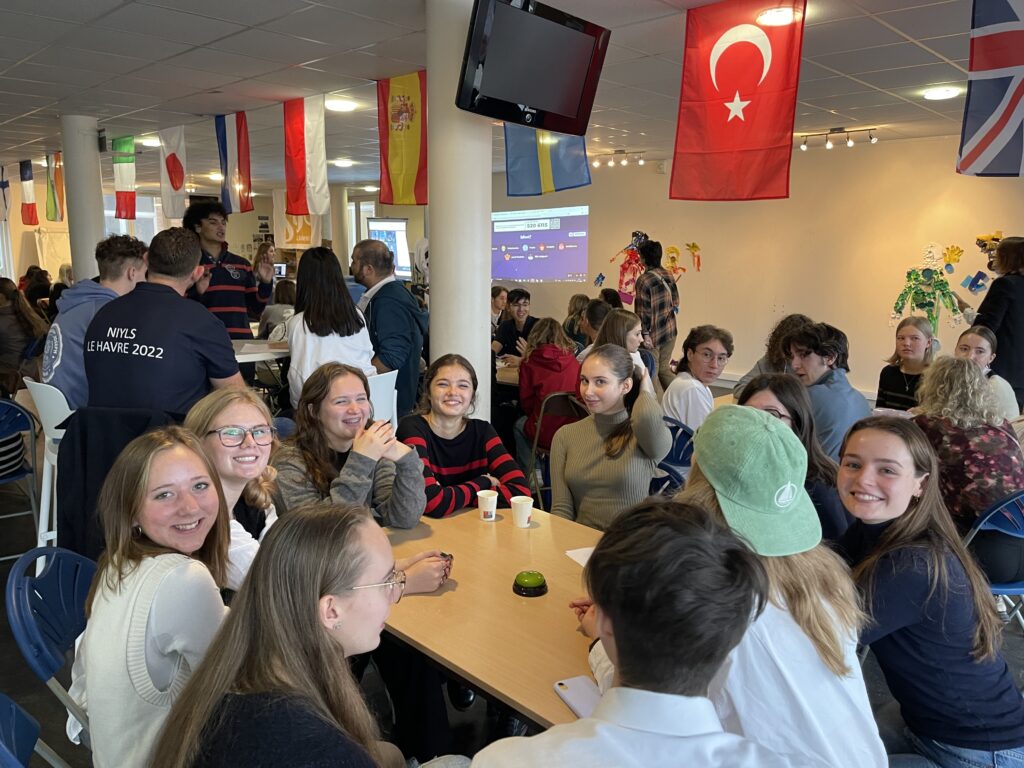
Our projects, exchanges and conferences involve Germany, Norway, Denmark, France, Lithuania, Switzerland, South Korea, Japan, the United Kingdom, the Netherlands, India, Nepal, the USA, Canada and Senegal, among others.
Our student exchange partners include schools in India, Germany, Nepal, Norway and the United States.
The school international work rests on the four UNESCO pillars of education: learning to know, to do, to live together and to be.
Why it matters
Why do academic and international links matter so much?
Working with universities, partner schools and international organisations is a chance to encounter new environments, build relationships, get to know the world of research, broaden intercultural skills, test interests in practice and develop the abilities needed at university and in adult life.
It is a very important part of what our School does, because we believe that a good high school should not only teach but also broaden horizons.
- encounter the academic world before they even start university,
- develop foreign languages in practice,
- learn to work on projects,
- meet people from other countries and cultures,
- gain confidence in communicating,
- come to understand their own aptitudes better,
- prepare for education in Poland and abroad.
Universities
Close to the universities, close to the future
Since its founding, VIII PALO has built strong ties with the academic world, and many of our teachers also work at universities. As a result, young people can get to know university life, take part in classes, research projects and academic conferences, and gain a clearer picture of what education after high school looks like.
Academic cooperation helps connect what is learned at school with research, university practice and future fields of study. That matters particularly for those considering demanding paths – in medicine, the natural sciences, engineering, economics, the arts or the humanities.
- Hugo Kollataj University of Agriculture in Krakow
- Faculty of Chemistry and the Institute of Environmental Sciences at the Faculty of Biology and Earth Sciences, Jagiellonian University
- Krakow University of Economics
- Faculty of Medicine, Collegium Medicum, Jagiellonian University (patron of the VIII PALO medical class)
- Jan Matejko Academy of Fine Arts in Krakow
- AGH University of Krakow
- University of the National Education Commission in Krakow


Academic patronage
A medical class under the patronage of Collegium Medicum, Jagiellonian University
The Faculty of Medicine of Collegium Medicum at the Jagiellonian University has taken the VIII PALO medical class under its academic patronage. That is important news for anyone interested in medicine, pharmacy, biotechnology, psychology, dietetics, the natural sciences or other health-related fields.
The aim of the patronage is to develop teaching links between the university and the school, to exchange experience in working with exceptionally able students, to support their academic development through university staff and to create joint research and teaching programmes.
For a student it means closer contact with the academic world, invaluable experience and a better understanding of careers in medicine and the natural sciences.
Beyond the syllabus
An education that goes beyond the syllabus
At VIII PALO young people can pursue their interests in an environment that brings school and university education together. We know how important such unique relationships are for our students, and we are aware that nothing else can replace them.
This is not an add-on to education, nor a marketing exercise. It is a way of sparking and developing interests, opening students to new possibilities, helping them make the right choices in life and creating the chance of a better future.
- preparation for demanding university courses,
- the development of exceptionally able students,
- contact with university teachers and specialists,
- participation in conferences, projects and research initiatives,
- a better understanding of academic work,
- informed planning of the next steps in education.
Open to the world
A school open to the world
International cooperation at VIII PALO serves to develop students linguistic, intercultural and social skills. We create opportunities to encounter different points of view, we teach openness to others and to difference, and we help students find their bearings in an increasingly globalised world of growing contrasts and paradoxes.
Our international work supports the School Mission – the all-round intellectual and emotional development of VIII PALO students, whether they are studying for the Polish Matura or the International Baccalaureate.
We want VIII PALO graduates to be well prepared to choose and follow their own career path, to be aware of their roots and to respect their own heritage while feeling, without any hesitation, like citizens of the world.
VIII PALO students have the chance to develop their foreign language skills not only in lessons with Polish teachers and native speakers. They can also broaden those skills in real situations – on international exchanges, in Model United Nations simulations, working with foreign cultural institutions, at international conferences and youth leadership summits, and through a variety of cultural, academic and educational projects on a European and global scale.
UNESCO Associated School
The four UNESCO pillars of education
The school international work rests on the four pillars of education within the UNESCO Associated Schools network.
Cooperation, respect for other cultures and building relationships based on mutual understanding.
That says a great deal about how we understand education. Knowledge matters, but responsibility, independence, the ability to work with others, openness, respect for other people and an awareness of one own roots matter even more.
IB World School
IB World School - an international standard of education
VIII PALO runs the IB Diploma Programme. The School obtained authorisation from the International Baccalaureate Organization in January 2011 and has run the IB DP since September 2011.
The IB programme is designed for students aged 16-18 and covers the final two years of Polish high school. In the Polish education system the IB diploma is equivalent to the Polish Matura.
- critical thinking,
- working with sources,
- essay writing,
- preparing and carrying out projects,
- building an argument and defending a position.
Exchanges and projects
Exchanges, projects and international experience
For years VIII PALO has been developing cooperation with schools, institutions and partners in a range of countries, including Germany, Norway, Denmark, France, Lithuania, Switzerland, South Korea, Japan, the United Kingdom, the Netherlands, India, Nepal, the USA, Canada and Senegal.
The Comenius project Water Unites, Water Divides, carried out with the Johanneum Gymnasium in Luneburg, Germany
The Comenius project Viribus Unitis – help the world with the joint effort, on sustainable development and environmental action
The Power of Culture project, supported by the Bureau of Educational and Cultural Affairs of the United States and by IREX
A Polish-Norwegian student exchange between VIII PALO and Gjovik videregaende skole
An exchange with Delhi Public School Gurgaon in India
Educational projects at Pompano Beach High School in Florida
The Connecting Cultures programme in Oman, under UNESCO
Normandy International Youth Leadership Summit, Institution Saint Joseph, Le Havre, France
India
An exchange with Delhi Public School in India
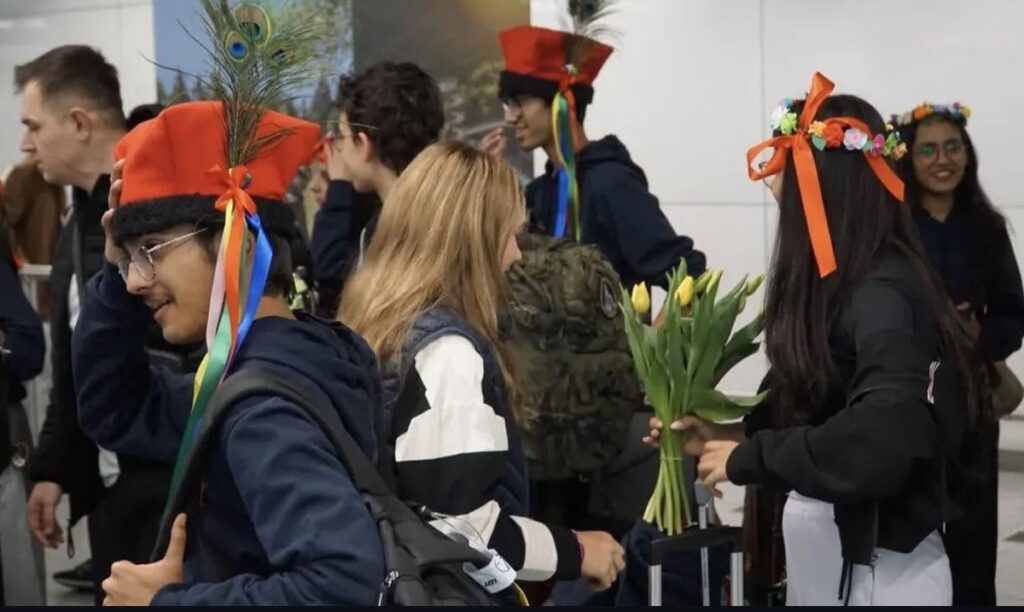
One important example of VIII PALO international cooperation is our exchange with Delhi Public School Gurgaon Sector 45 in India.
From 1 to 14 October 2025, VIII PALO students and teachers took part in this exchange for the eleventh time. It shows that the school international cooperation is not a one-off initiative but a lasting part of its education.
Experiences like these allow students to get to know other cultures, work in an international setting and better understand the world.
eTwinning and UNESCO
eTwinning, UNESCO and student projects
Since November 2012 VIII PALO has been running projects under the eTwinning programme. The first was called From Neighbours to Friends through Blogging and involved creating a blog together with students from the Czech Republic.
In the 2024/2025 school year the school also took part in the eTwinning and UNESCO ASPnet project MFP Unesco Days Together – Celebrating UNESCO Days. For this nationwide undertaking VIII PALO received the National Quality Label.
Projects like these develop skills that cannot be acquired any other way. They teach cooperation, responsibility and openness to others.
Benefits
What is there to gain?
Academic and international cooperation brings concrete benefits. It helps students prepare better for the Matura, for university and for adult life, and it develops personal and social skills.
That matters particularly when a young person is thinking about studying in Poland, studying abroad or working in an international environment.
- gain experience in an academic environment,
- learn about the study paths open to them,
- develop foreign languages in practice,
- learn to work with people from other countries and cultures,
- gain experience of project work,
- grow more independent,
- develop their curiosity about the world,
- understand their own capabilities better,
- learn responsibility for themselves and others.
In summary
A school that prepares you for life
Choosing a high school is a decision that affects not only the next few years of study, but a whole life.
That is why at VIII PALO we give young people opportunities to work with the academic world, take part in international projects, develop their language skills in real situations, get to know other cultures and build relationships. We teach openness and empathy.
We let students live fully and we prepare them for real life.
See for yourself
Get to know the School that opens students to the world
One of the best ways to get to know the School is to talk to us.
At the admissions meeting with the applicant and their parents or legal guardians, we want above all to get to know the applicant as a person – their interests, needs and plans. We will gladly answer any questions – about our programmes, the IB, academic and international cooperation and everyday life at the school.
Do get in touch and arrange a meeting with the headteacher.